
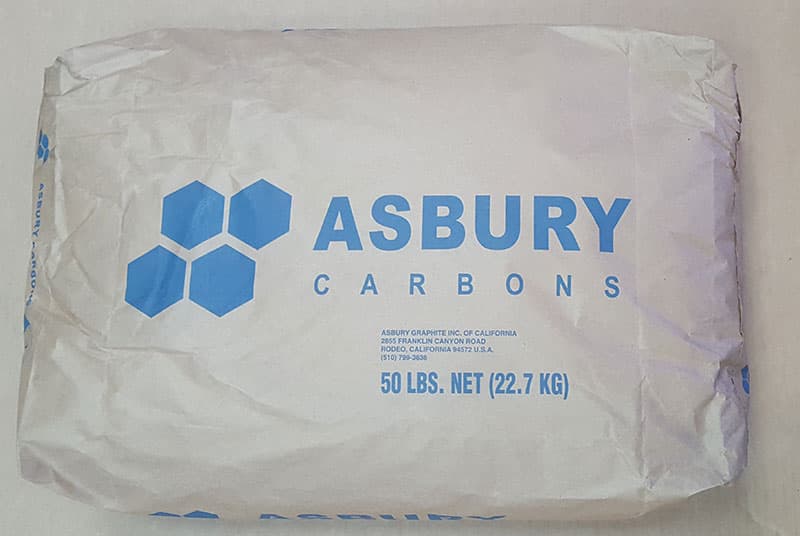
Asbury Coke Breeze
Carbon is Life
Carbon is the basic building block of all organic substances and is therefore the basis of all living things. Because carbon combines readily with oxygen, giving off heat as a by-product, it is also a vital energy source. Carbon is one of the most useful of all chemical elements and Asbury Carbons is the most experienced processor of carbon products for industry today. Amorphous carbons such as coal, petroleum coke, pitch coke, active carbon and carbon black have unique physical and chemical properties. These properties enable us to process amorphous carbons for a myriad of industrial applications including chemical reducing agents, carbide forming reagents, metallurgical products, cathodic protection materials and adsorbing carbons just to name a few.
Carbon in the form of crystalline graphite possesses a combination of properties including lubricity, refractoriness, chemically inertness, as well as thermal and electrical conduction. These properties make graphite the material of choice for thousands of end-use applications including crucibles, refractories, cements, lubricants, chemical tank linings, powder metal parts, polymer compounds, drilling fluids, electric motor brushes, batteries, artificial diamonds, and others too numerous to mention.
Cathodic Protection
Asbury uses only the highest quality carbon materials to provide the cathodic protection industry with advanced, engineered materials that provide a combination of properties including high conductivity, resistance to corrosive environments, environmental stability, and easy-pouring and cavity-filling characteristics. These properties and Asbury Carbons’ 100+ years of experience make Asbury cathodic protection grades the experts’ choice.
Petroleum Coke
Petroleum coke is a manufactured carbon product produced at a limited number of oil refineries. Petroleum coke results from the thermal processing of residual oil, which has been cracked or otherwise processed to remove low boiling fractions.
Coke is made by heat-treating the residual oil (more accurately described as tar) to a temperature high enough to result in its polymerization to form a non-melting solid carbon. The process is performed to maximize the yield of lower molecular weight compounds derived from crude oil feedstocks. Coke, as it is removed from the coking process, is referred to as green coke. Green petroleum coke contains approximately 15-20% residual hydrocarbon materials. These hydrocarbons are those compounds that do not polymerize in the coking process and cannot be removed from the coke substrate due to process limitations.
Calcined petroleum coke (CPC) is manufactured by heating green coke to approximately 1300-1400 C in a rotary kiln. This affects the removal of virtually all residual hydrocarbons and moisture. The final calcined product contains only a trace of volatile matter, and 0.3-6% sulfur, depending on the petroleum base used to make the coke. Calcined and green petroleum cokes are inherently low in ash constituents. The fixed carbon content of most calcined petroleum coke products ranges from approximately 97-99.5%.
Petroleum coke is used in applications where high quality non-graphitic carbons are required. Some applications for petroleum coke include foundry products, wear moderators for PTFE compounds, rubber compounds, reducing reagents, ceramic packing media, oxygen exclusion from molten materials, manufactured carbon shapes, alloys, cathodic backfill, drilling additives, case hardening, seals, mechanical carbons, and flooring.
Available Products
| Product Name | Quote | Specs |
|---|---|---|
| Asbury Coke Breeze |
Don't see what you're looking for?
Contact our Corrosion Experts for help!
Contact Us